Heart of Darkness
22”x36” Acrylic on synthetic satin
This work pulls inspiration directly from Joseph Conrads 1899 novel Heart of Darkness. The novel reflects the harsh moral decay of Belgian colonizers toward African tribes in the modern-day Congo area, and Conrad works to showcase that illness with vivid imagery. Utilizing four quotes from the novel, I depicted four different scenes of blatant dehumanization with a simplified color palette to highlight what the native men were disgustingly reduced to. Similarly, I chose satin as my canvas to highlight the resilience of their human spirit.
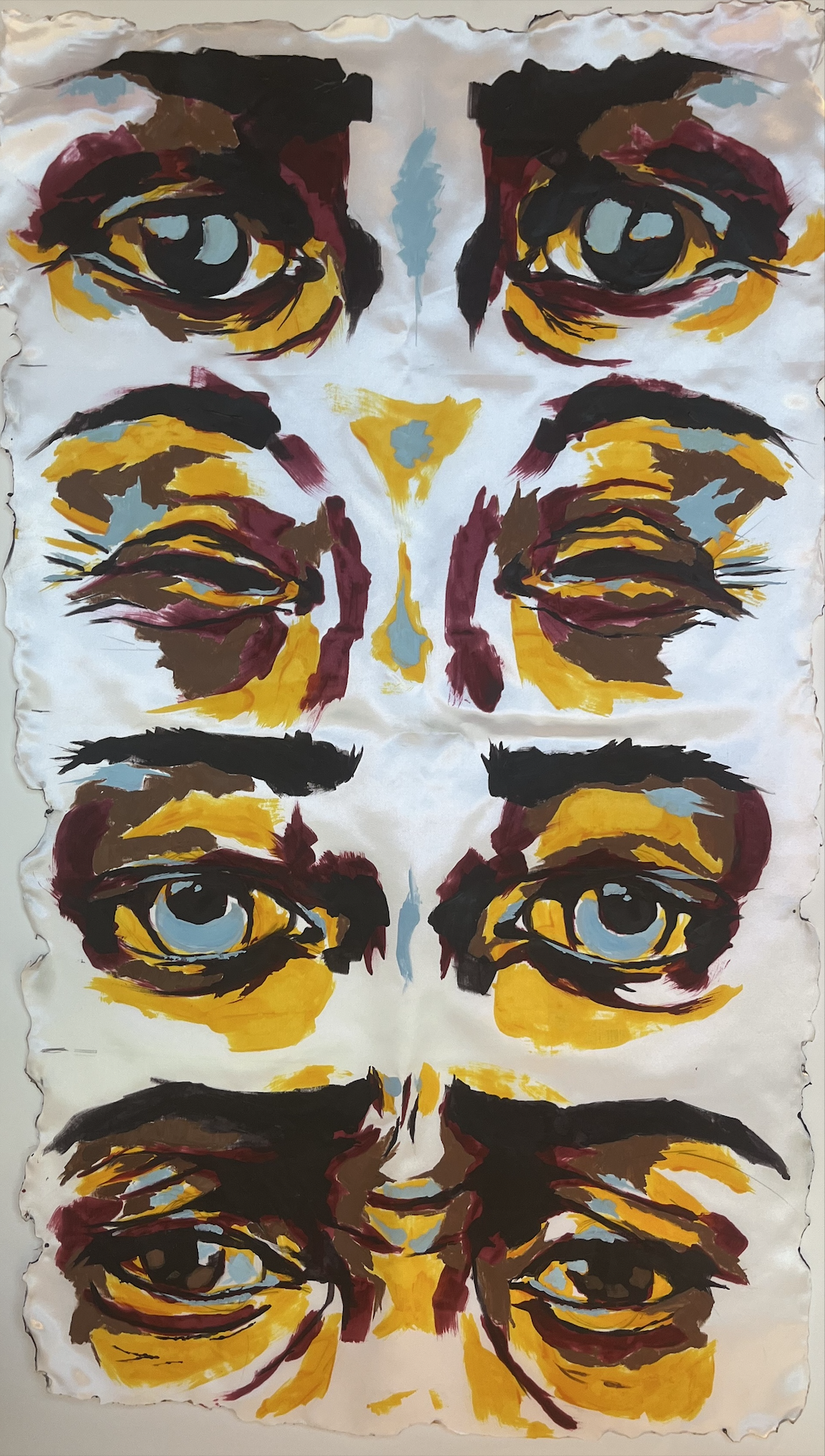
**Below I have noted the four passages in order from top to bottom on how they are depicted in the work
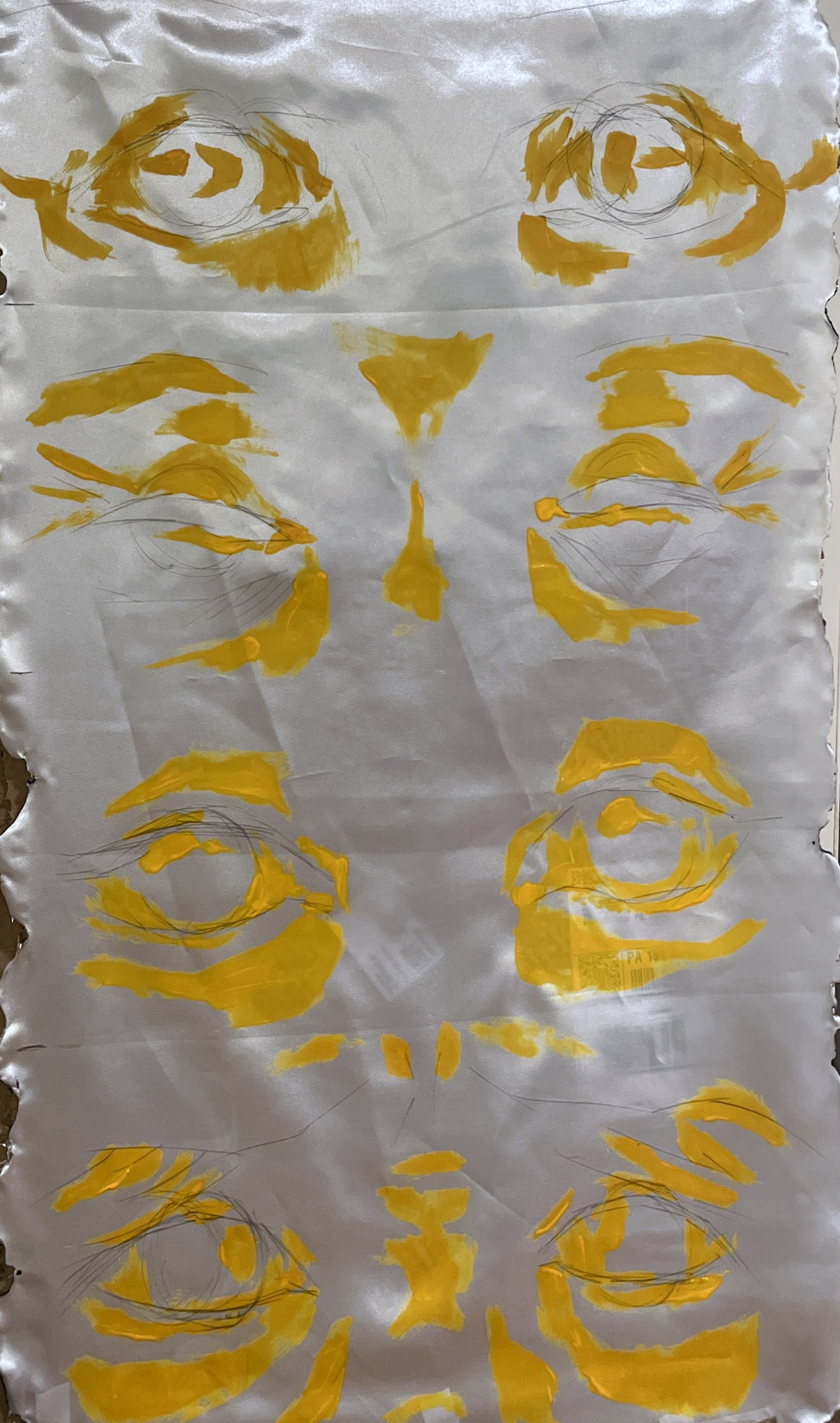
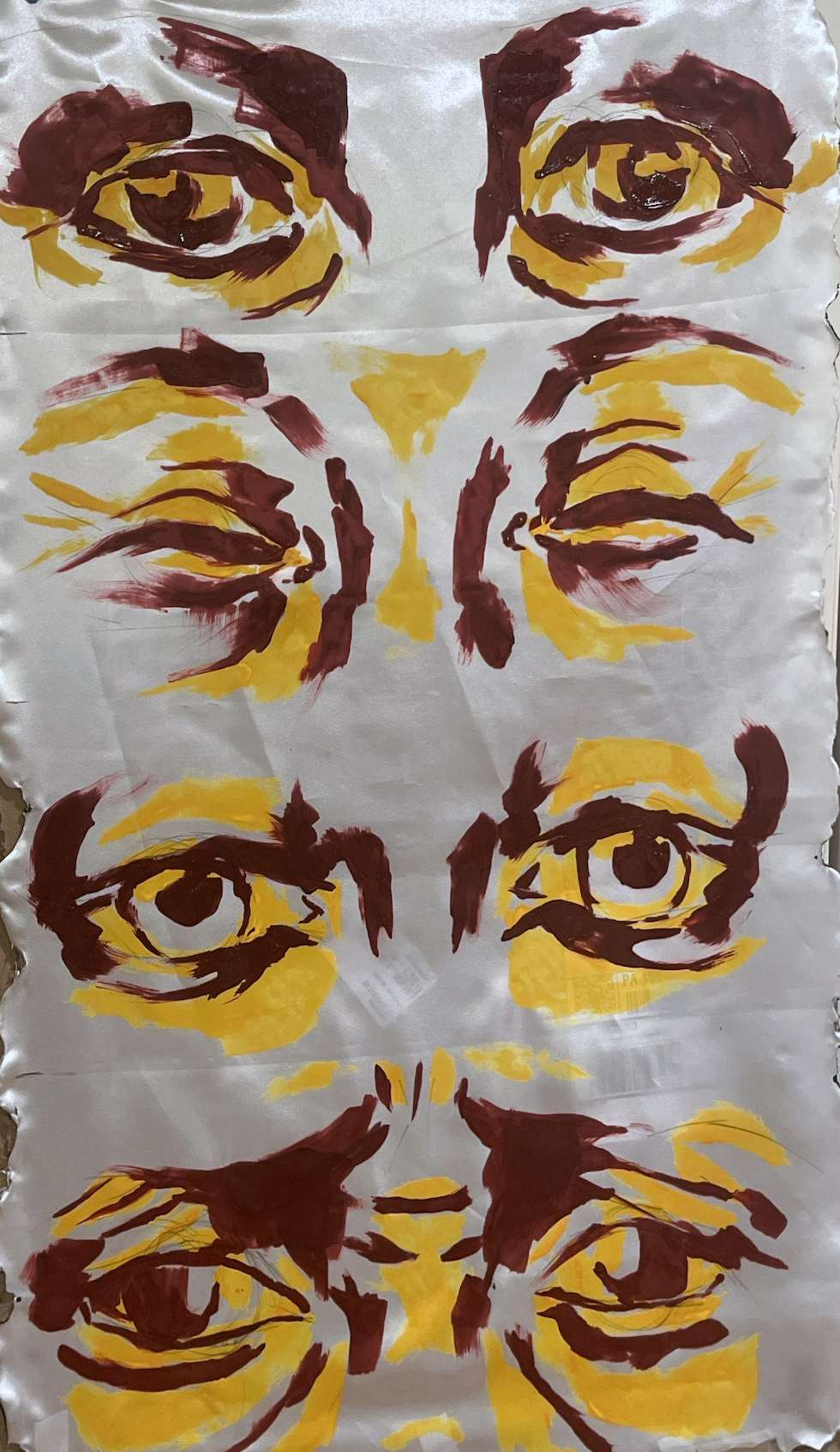
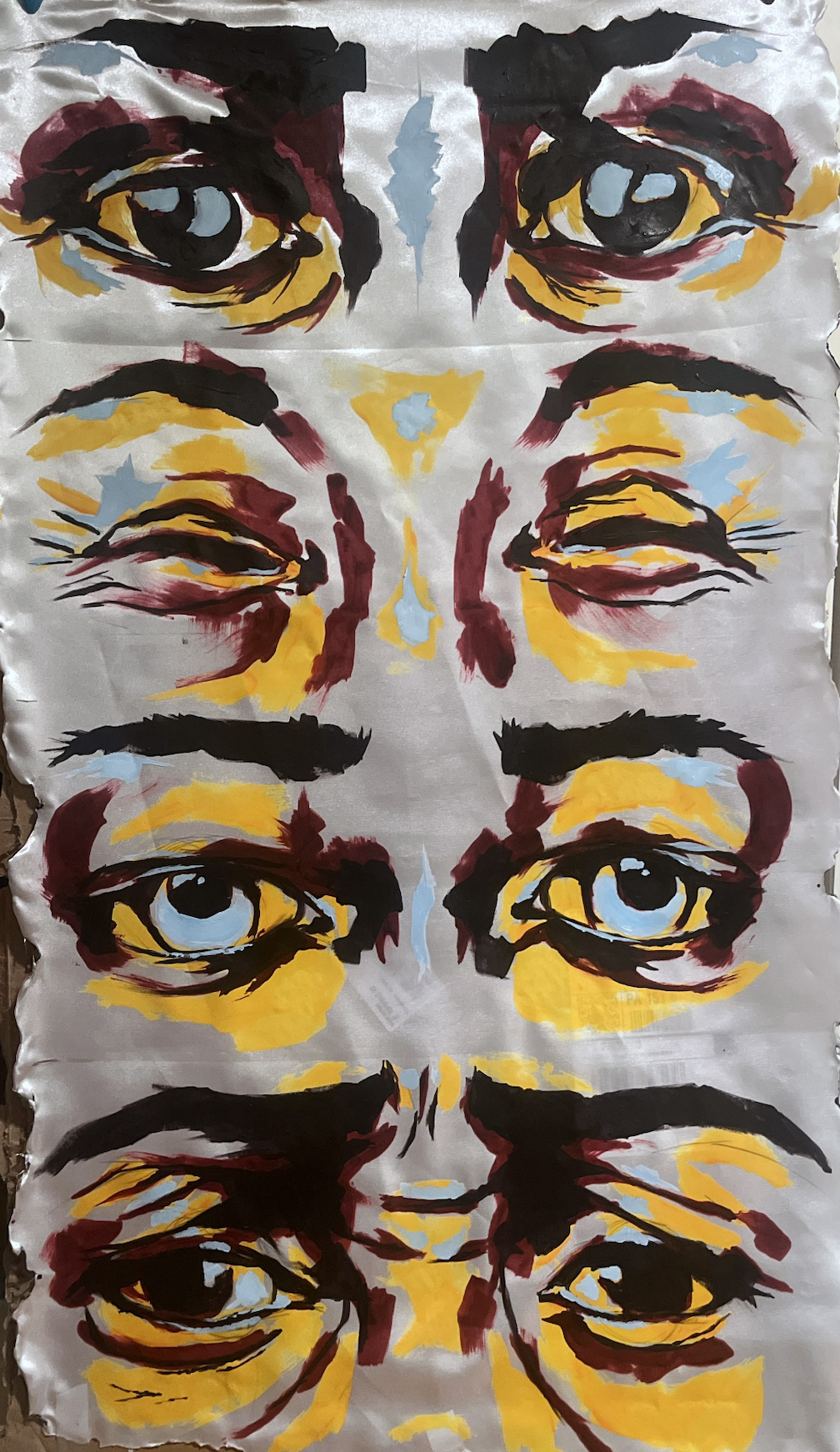
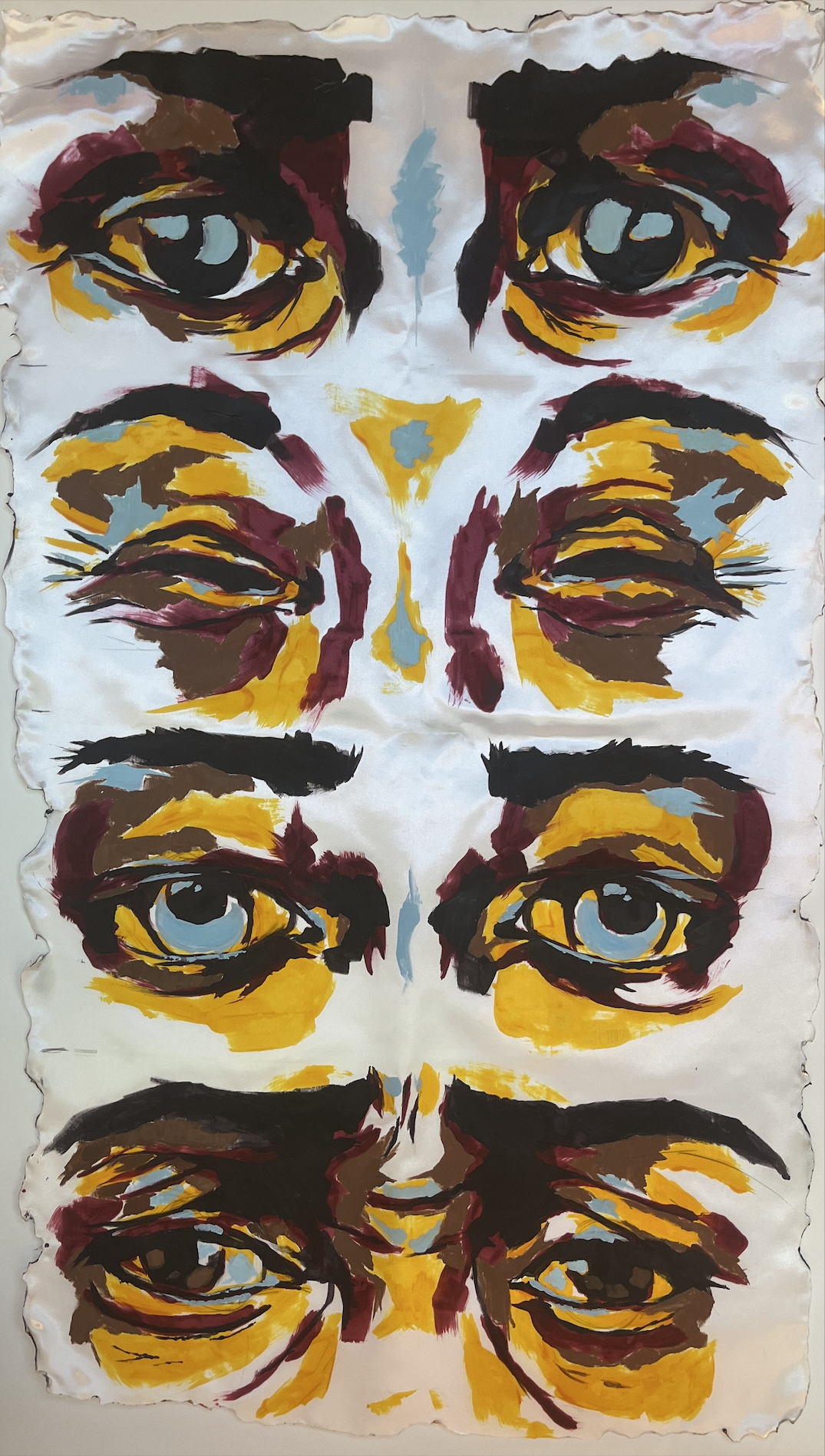
“The black bones reclined at full length with one shoulder against the tree, and slowly the eyelids rose and the sunken eyes looked up at me, enormous and vacant, a kind of blind, white flicker in the depths of the orbs, which died out slowly. The man seemed young—almost a boy—but you know with them it’s hard to tell” (Conrad Part I).
“I returned deliberately to the first I had seen—and there it was, black, dried, sunken, with closed eyelids—a head that seemed to sleep at the top of that pole, and, with the shrunken dry lips showing a narrow white line of the teeth, was smiling, too, smiling continuously at some endless and jocose dream of that eternal slumber”(Conrad Part III).
“And between whiles I had to look after the savage who was fireman. He was an improved specimen; he could fire up a vertical boiler. [...] A few months of training had done for that really fine chap. He squinted at the steam-gauge and at the water-gauge with an evident effort of intrepidity—and he had filed teeth, too, the poor devil, and the wool of his pate shaved into queer patterns” (Conrad Part I).
“We two whites stood over him, and his lustrous and inquiring glance enveloped us both. [...] he frowned heavily, and that frown gave to his black death-mask an inconceivably sombre, brooding, and menacing expression. The lustre of inquiring glance faded swiftly into vacant glassiness”(Conrad Part II).